
Why is a nasal splint used after rhinoplasty?
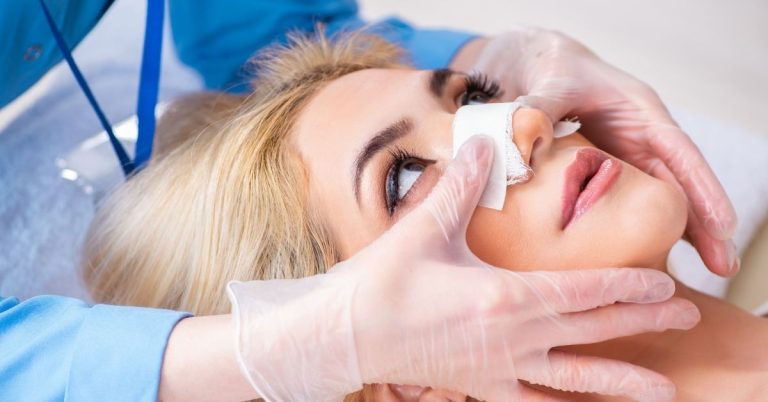
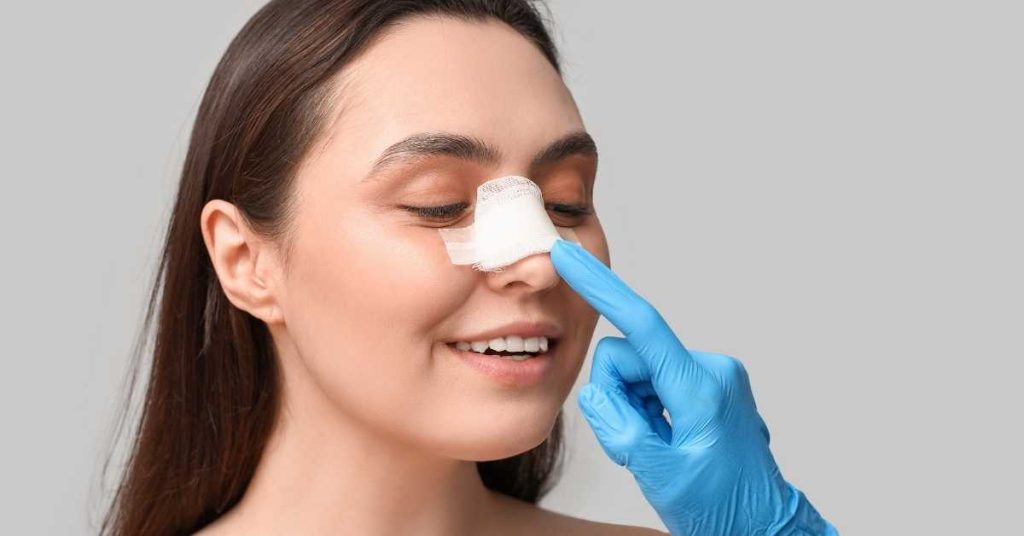
The nasal splint does one essential job after rhinoplasty: it holds the bony and cartilaginous structures in the position the surgeon gave them. During the first days, when the tissues have not yet consolidated, it acts as a shield around a nose that cannot yet protect itself.
It also limits swelling by applying gentle, even pressure on the operated area, and prevents early deformity should the nose take an accidental knock in the days following the procedure.
What is the typical duration of wearing a splint after rhinoplasty?
The duration of wearing the splint is one of the questions patients ask most often. Each case differs, but most surgeons keep the nasal dressing in place for seven to ten days, depending on the type of procedure and on individual healing. The page dedicated to rhinoplasty details the operation itself.
The usual benchmarks in rhinoplasty are as follows:
- For structural rhinoplasty (involving bone modification), the splint is often kept on for eight to ten days.
- In lighter or exclusively cartilaginous procedures, removal around the sixth or seventh day is sometimes considered.
- Some practitioners offer an intermediate check-up to adjust the duration, especially in cases of significant swelling or slow healing.
The shape of the nose keeps changing well beyond that point, since healing is gradual and needs both patience and follow-up. An article on the evolution of rhinoplasty sets out that timeline month by month.
The splint removal process
Splint removal takes place at a scheduled post-operative consultation, usually a week after the operation. The surgeon softens the adhesive and lifts the nasal cast slowly, since the underlying skin is thin and still fragile.
Nothing is required of you beforehand beyond avoiding contact or pressure on the splint. Removing it yourself is the one thing never to attempt, whatever it looks like at home.
What does it feel like when the splint is removed?
Removal is not painful, though most patients describe an odd sensation as the nose is freed and air reaches the skin again. The actual volume becomes visible for the first time, still surrounded by swelling and bruising.
What you see that day is not the result. The nose at splint removal is a swollen version of itself, and several weeks are needed before the shape obtained by rhinoplasty starts to emerge.
What to do after the splint is removed?
Once the splint is removed, the precautions continue. Healing goes on beneath the surface for months and is nowhere near complete on the day of removal. Two things matter from here: protecting the operated area, and monitoring its progress at the following post-operative consultations.
Your surgeon may prescribe gentle nasal massages or specific skin care over the following weeks. Anything liable to strike the face is off the table for about a month, which means postponing contact sport, heavy glasses and intense sun exposure.
When do swelling and bruising disappear?
Swelling and bruising follow directly from the surgical gesture, and their extent varies widely between individuals. Bruising generally clears within two weeks of splint removal.
Swelling starts to fall noticeably from the second week, then persists in small amounts for several months, mostly at the tip of the nose where the skin is thickest.
Social downtime after splint placement: how long to wait?
No fixed rule governs the duration of social downtime after rhinoplasty. Most patients prefer to wait until the nasal cast comes off and the visible marks have faded. Ten days of social leave usually covers the period when the splint is worn and swelling is at its most obvious.
Adjust that window to your professional life and to the extent of your bruising. A role facing the public sometimes justifies waiting a few days longer.
How to improve healing after rhinoplasty?
Good healing starts the moment you leave the operating room. After splint removal, a handful of habits make a measurable difference:
- Protect your nose from blows and avoid wearing heavy glasses
- Gently clean the skin of the nose without rubbing or pressing
- Apply a healing cream if prescribed
- Avoid prolonged exposure to the sun or high heat to prevent pigmentation of the operated area
- Scrupulously follow each step of the follow-up during post-operative consultations
Following these points influences recovery directly and reduces the risk of late complications such as contour irregularities or secondary nasal deformity.
Tissue evolution deserves attention over the first six months in particular, since that is the period during which the need for any touch-up becomes clear.
Can the duration of wearing a splint after rhinoplasty be personalized?
Patients do not all need the same protocol. Skin elasticity, the complexity of the rhinoplasty, tolerance of the nasal splint and the presence of an additional nasal dressing all change the exact duration of wear.
That duration is adjusted with your surgeon according to what is observed at the post-operative consultations. The aim of these adjustments is to keep the support effective without making your recovery harder than it needs to be.