Asian eyelid surgery in Paris 16th

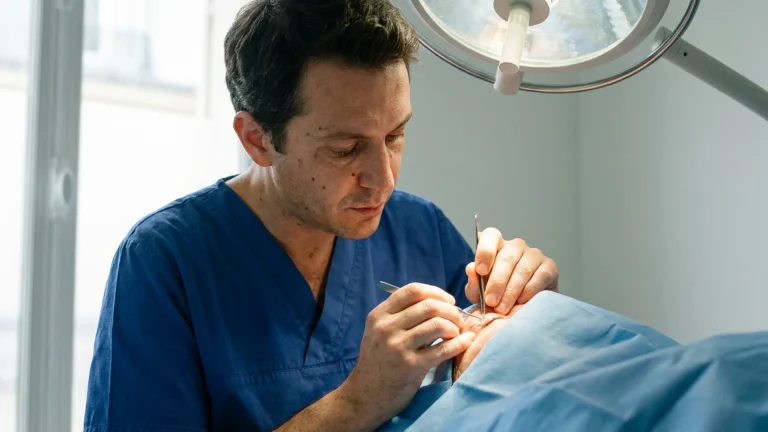
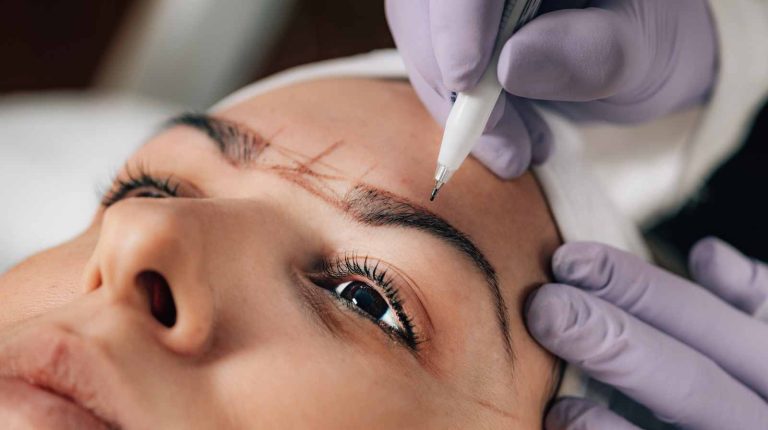
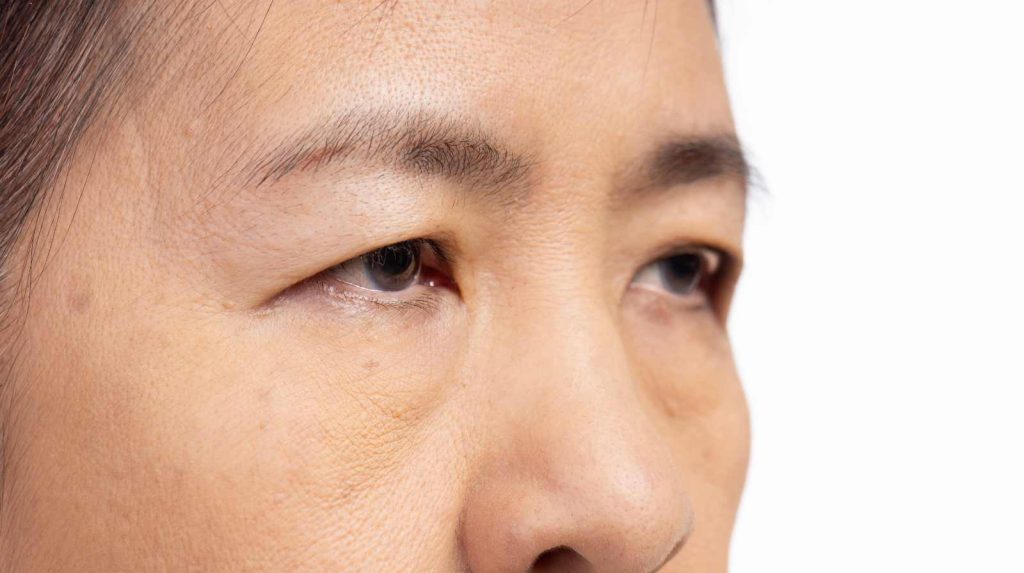
Asian eyelid surgery, also called Asian blepharoplasty, aims to create or redefine the upper eyelid crease. This procedure takes into account the specific anatomical particularities of Asian eyelids, notably the absence or low position of the eyelid fold. The desired objective remains an opening of the gaze, while respecting natural features and morphological identity. The expected result maintains a balanced and natural appearance, without an artificial transformation of the gaze.

Who is this procedure for?

This procedure can be suitable for people with a upper eyelid without a visible crease.
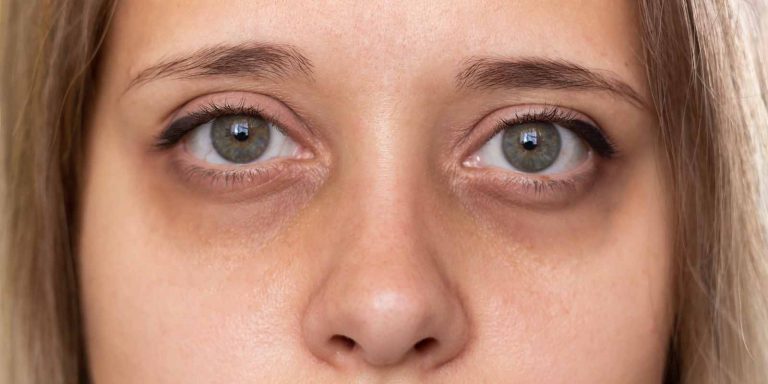
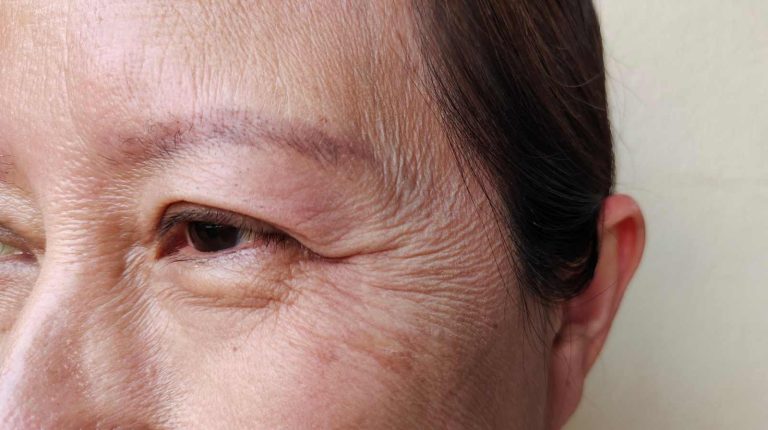
You may consider this surgery if you experience a heavy-looking gaze or a closed expression.
It also concerns patients wishing to harmonize their gaze without altering their fundamental features.
Certain specific anatomical situations may require an in-depth analysis before any recommendation.

Consultation Process

Analysis and Indication

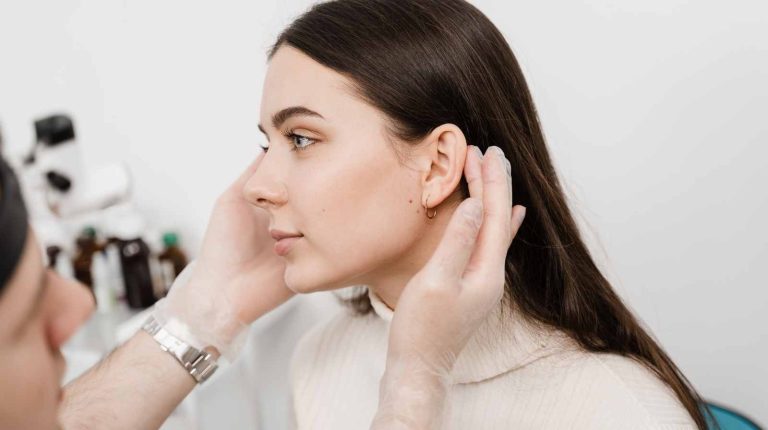
The consultation allows for an analysis of the eyelid morphology, fat distribution, and skin quality.
The evaluation also covers the position of the levator muscle and the eyelid tarsus.
Medical photographs may be taken to document the initial situation.
Expectations are discussed to define a realistic and personalized goal.

Preparation and Examinations

An ophthalmological assessment may be offered depending on your situation.
Ocular history is taken to rule out any potential contraindications.
Pre-operative recommendations may be given, particularly concerning certain medications.
A personalized quote will be provided after the indication has been confirmed.

The Procedure in Practice

Anesthesia and Duration

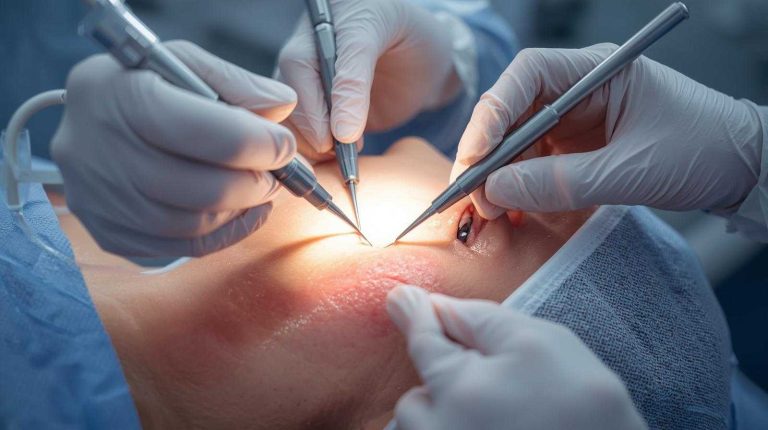
The procedure can be performed under local anesthesia, sometimes combined with light sedation.
In some cases, general anesthesia may be considered depending on the context.
The operating time varies depending on the chosen technique and anatomical complexity.

Technical Principles

Several approaches exist:

  • Incisionless technique, using deep sutures,

  • Partial incision technique,

  • Open technique, allowing for intervention on the skin and fat if necessary.

The choice depends on the eyelid structure, skin elasticity, and the goals defined together.
The procedure takes place in a suitable surgical facility, outside our clinic.

Post-operative Care

Pain and Care

The aftermath is generally moderate, with temporary swelling and sometimes bruising.
Local care is prescribed to promote gradual healing.
A feeling of eyelid tightness may occur during the first few days.

Return to Activities and Follow-up

A return to normal activities can be considered after a few days, depending on your recovery.
Sports activities are postponed for a period defined during consultations.
A regular post-operative follow-up allows for monitoring progress and adjusting care.

Results and Scars

The result begins to be visible quickly, despite initial swelling.
The final appearance is assessed after several weeks, sometimes a few months.
The scars, when present, are located in the eyelid crease and become discreet over time.
Satisfaction depends on adherence to the initial indications and the individual healing quality.

Risks and Possible Complications

Like any surgical procedure, this surgery carries potential risks.
These may include asymmetries, crease recurrence, prolonged swelling, or visible scars.
These situations remain infrequent when the indication is well-established and the technique appropriate.
Pre-operative consultations allow for these elements to be discussed with transparency and clarity.

Fees and Coverage

Asian eyelid surgery falls under cosmetic surgery.
It is not covered by health insurance.
The price is established by quote, depending on the chosen technique and anesthesia modalities.
As an indication, the cost may fall within a variable range, defined during pre-operative consultations.

Frequently asked questions

Difference between full incision and mini-incision (Double Eyelid) techniques?

Full technique uses a continuous incision along the future upper fold, allowing a very defined and durable result. Mini-incision technique (Double Eyelid) uses several points to create the fold without continuous incision, with simpler recovery but sometimes less stable result.

Why are about half of Asians born without an upper palpebral fold?

The absence of upper palpebral fold is a frequent anatomical characteristic in East Asian populations, related to different attachment of levator muscle fibers. It is a normal, non-pathological morphological variation.

Is the fold created by Asian blepharoplasty permanent?

The fold created by surgical incision technique is generally permanent. Mini-incision techniques may fade with time. The result stabilizes at 3-6 months after surgery.

Can a fold be undone if the result is not satisfactory?

Surgical revision is technically possible but more complex than the initial procedure. A minimum 12-month delay is required. Pre-operative consultation with photos and simulations aims to precisely validate the expected project.

Difference between Asian blepharoplasty and Western upper blepharoplasty?

Western blepharoplasty removes skin excess on upper eyelid. Asian blepharoplasty creates or redesigns a palpebral fold according to the specific anatomy of the Asian eyelid (pre-tarsal fat, different muscle attachment).

Does Asian blepharoplasty modify the ethnic identity of the gaze?

The goal of a respectful Asian blepharoplasty is to optimize the gaze while preserving ethnic characteristics. The created fold remains typically Asian (low fold, parallel or half-moon). The result is discussed in consultation to avoid any 'Westernizing' aspect.

Avertissement

Les informations médicales présentées sur ce site sont fournies à titre informatif uniquement et ne constituent pas un avis médical, un diagnostic ni une recommandation de traitement. Les résultats peuvent varier selon chaque patient.

Les images et contenus visuels peuvent inclure des illustrations, photos non contractuelles ou contenus générés par intelligence artificielle, utilisés uniquement à des fins explicatives. Ils ne garantissent en aucun cas un résultat.

Toute décision médicale doit être prise après consultation avec un praticien qualifié. Seule une évaluation médicale personnalisée permet de déterminer un traitement adapté, conformément au Code de la santé publique. La Clinique Spontini ne saurait être tenue responsable d’une interprétation ou utilisation des informations présentes sur ce site.

En cas d’urgence médicale, contactez immédiatement le 15, le 18, ou rendez-vous aux urgences.

Feedback
Contact the Spontini Clinic
Access to the Spontini Clinic

76 Rue Spontini, 75016 Paris

Opening hours:

  • Monday: 9:00 a.m.–7:00 p.m.
  • Tuesday: 9:00 a.m.–7:00 p.m.
  • Wednesday: 9:00 a.m.–7:00 p.m.
  • Thursday: 9:00 a.m.–7:00 p.m.
  • Friday: 9:00 a.m.–7:00 p.m.
  • Saturday: 9:00 a.m.–7:00 p.m.
  • Sunday: 10:00 a.m.–2:00 p.m.