Who is this procedure for?
Breast reconstruction is for patients who have undergone:
• a mastectomy,
• a lumpectomy with persistent deformity,
• breast asymmetry after cancer treatment,
• aesthetic or functional sequelae related to treatment.
Consultations allow for the analysis of:
• skin quality,
• treatments already received such as radiotherapy,
• body shape,
• aesthetic expectations,
• the desired timeline for reconstruction.
These discussions are used to define a personalized strategy, which may evolve over time.
Preparation steps and technical choices
A pre-operative assessment is systematically carried out.
This may include imaging tests, an anesthesia consultation, and an analysis of past treatments.
Smoking cessation is required before any reconstruction.
The technical choice depends on several parameters:
• reconstruction with implants,
• reconstruction with fat injection (lipofilling),
• reconstruction with flaps using your own tissues,
• or a combination of techniques.
A personalized quote is provided after the surgical plan is approved.
The post-operative recovery and the number of stages are explained in detail.
The procedure in practice
The procedure is performed under general anesthesia in a suitable surgical facility.
The operating time varies depending on the technique used.
A short hospital stay is usually necessary.
The main technical principles are based on:
• recreating breast volume,
• harmonizing symmetry,
• preserving tissues,
• progressive reconstruction when it is preferable.
The reconstruction of the areola and nipple is most often performed in a second stage.
Post-operative recovery
Pain generally remains moderate and well-controlled.
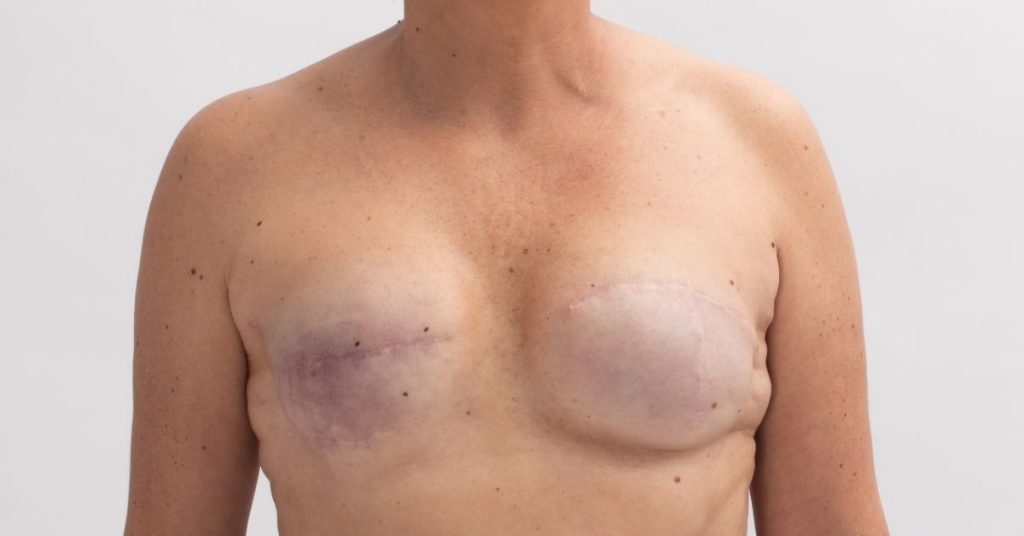
Swelling and bruising are common in the first few weeks.
Local care is simple and explained during follow-up.
Resumption of activities is gradual:
• brisk walking after a few days,
• daily activities within two to three weeks,
• sports after medical approval.
Regular post-operative follow-up accompanies each stage of the reconstruction.
Results and scars
The expected result is a balanced chest, in harmony with your body shape.
The result evolves over several months, sometimes more than a year.
Scars soften and fade gradually.
Scar quality depends on individual factors, including skin and previous treatments.
Satisfaction is based on a gradual and realistic outcome, discussed beforehand.
Risks and possible complications
Like any surgery, breast reconstruction carries potential risks:
• hematoma,
• infection,
• delayed healing,
• partial resorption of injected fat,
• complications related to implants when used.
These situations are rare and are subject to appropriate management.
Each indication is evaluated to ensure a balance of benefits and risks.
Fees and coverage
Breast reconstruction after cancer is covered by social security when it is part of the reconstructive process.
Additional fees depend on the chosen technique and the surgical pathway.
For this procedure, the fee is by quote, established after consultation and a complete analysis of your situation.