Who is this treatment for?
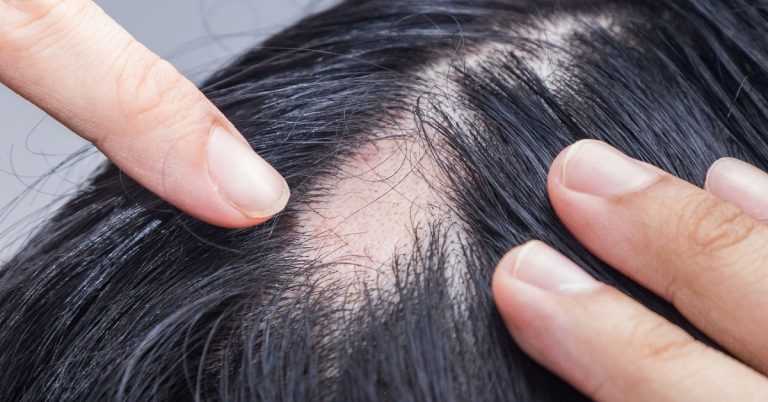
Hair grafting is for people with androgenetic alopecia, male or female.
It can also be considered for traction alopecia, certain scars, or a frontal hairline deemed too high.
The treatment requires a sufficient and good quality donor area.
Grafting may not be recommended if the hair loss is still progressing.
Certain situations require prior medical advice, particularly in cases of active scalp pathology.
Session procedure
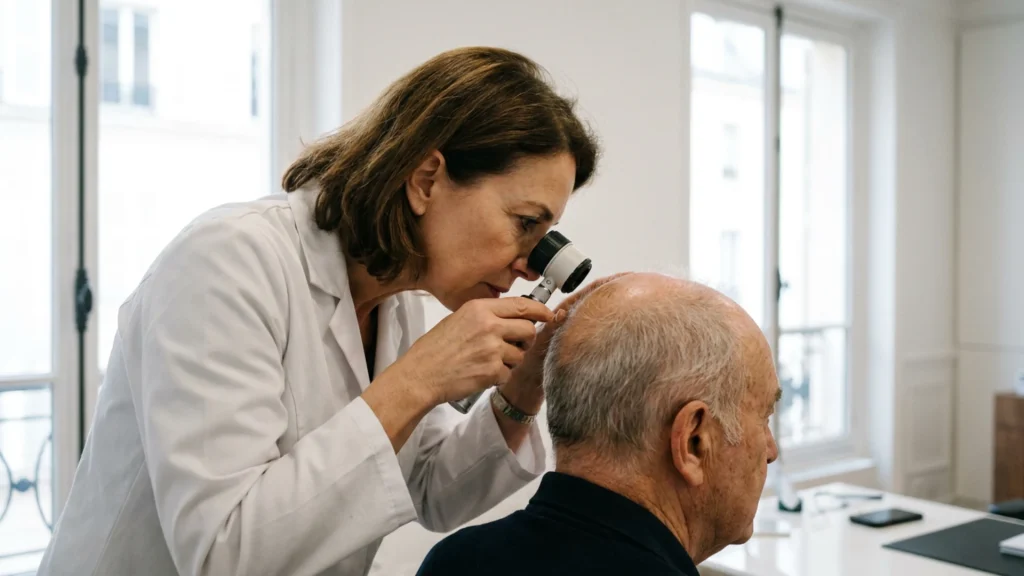
The session begins with a thorough medical consultation and scalp analysis.
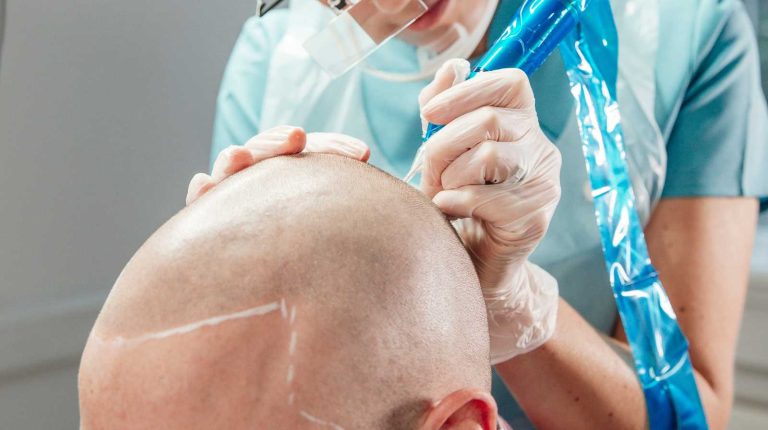
The treatment is performed under local anesthesia and on an outpatient basis.
The duration varies depending on the area to be treated and the number of grafts, often several hours.
Follicular harvesting and individual implantation in the targeted areas are carried out.
The entire session aims for a harmonious result, respecting the natural direction of the hair.
FUE or FUT: which hair transplant technique?
The session begins with a preliminary medical consultation, with analysis of the scalp and the areas to be treated.
FUE technique
FUE consists of extracting follicular units one by one, using micro-instruments.
The duration varies depending on the number of grafts, often several hours.
The grafts are then implanted individually, respecting the natural angle and direction of growth.
The technique leaves no visible linear scar.
FUT technique
FUT involves removing a thin strip of scalp from the donor area.
The follicular units are then prepared under magnification, and then implanted one by one.
The duration depends on the extent of the treated area, often 3 to 6 hours.
A discreet linear scar may remain in the donor area.
The procedure is performed under local anesthesia, with monitored comfort throughout the session.
Results
The grafted hairs generally fall out in the first few weeks following the procedure.
Progressive regrowth often begins around the third month.
The result becomes more visible around six months and continues to evolve.
The final result is usually observed around twelve months.
The implanted hairs come from the donor area and have durability over time.
Aftercare and recommendations
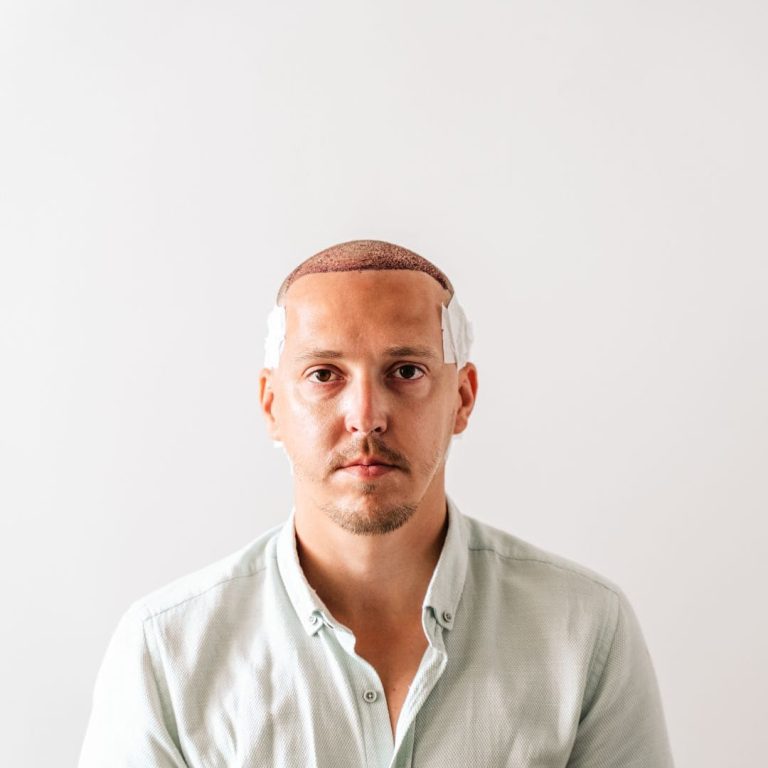
Redness, mild swelling, or scalp sensitivity may appear temporarily.
Small scabs form in the implanted areas, then disappear spontaneously.
It is advisable to avoid sports, heat, and friction for several days.
Post-procedure care follows a precise protocol, explained during the consultation.
Regular medical follow-up accompanies the regrowth progress.
Pricing
The cost of hair grafting depends on the number of grafts needed and the extent of the treated areas.
A precise estimate is provided after the medical consultation.