

Who is this procedure for?
Rhinoplasty is for patients who are bothered by the appearance of their nose or by nasal breathing difficulties.
You may consult for a dorsal hump, a drooping tip, a wide nose, asymmetry, or a deviation.
Some situations result from old trauma or previous nasal surgery.
The request may concern a primary rhinoplasty or a secondary rhinoplasty, which is sometimes more complex.
The indication is only made after a complete clinical examination and a detailed discussion about your expectations.
Consultation process
Care begins with a first specialized consultation.
You will explain your motivations, your aesthetic or functional concerns, and your medical history.
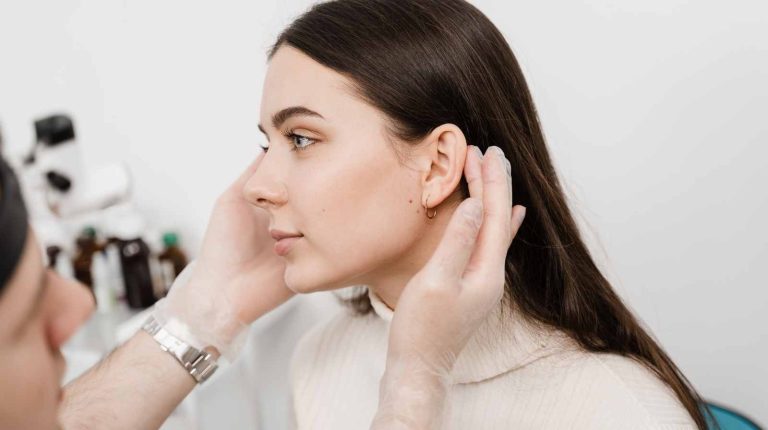
A nasal examination, both external and internal, will be performed to assess the nasal septum.
Medical photographs may be taken to analyze proportions and explain surgical options.
A personalized quote will be provided, along with detailed explanations of the post-operative recovery and the limitations of the procedure.
A consultation with the anesthesiologist is necessary before any procedure.
Additional tests may be requested depending on your situation, particularly in cases of breathing difficulties.
A legal reflection period applies before any cosmetic surgery.
The procedure in practice
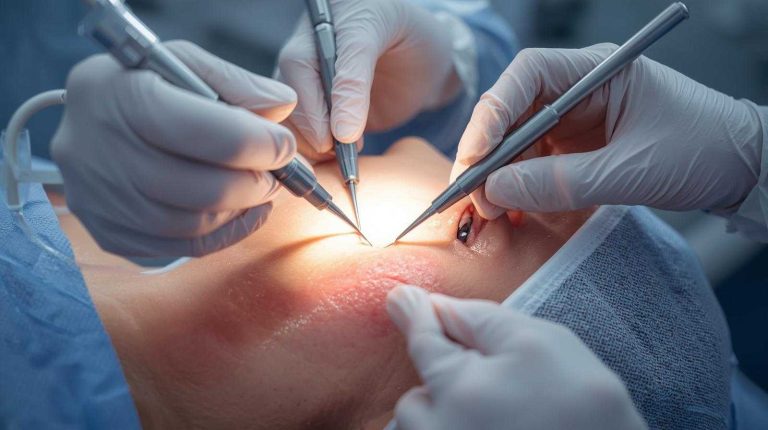
Rhinoplasty is usually performed under general anesthesia.
The operating time varies depending on the complexity of the corrections planned.
The procedure takes place in an authorized surgical facility, separate from the consultation office.
The techniques used can be closed or open, depending on the anatomy and the necessary procedures.
The principle is based on a precise reshaping of the bone and cartilage structures, without standardization of the result.
Outpatient hospitalization is often considered, subject to medical validation.
Post-operative recovery
Immediate recovery usually involves a stuffy nose sensation, due to internal swelling.
Swelling and sometimes bruising may appear around the nose and eyelids.
Pain is usually mild and controlled with appropriate medication.
An external nasal splint is applied to stabilize the operated structures.
Post-operative follow-up includes regular consultations to monitor healing and progress.
A return to social activities can be gradually considered, depending on individual progress.
Sports activities require a longer period, assessed on a case-by-case basis.
Results and scars
The initial result is visible quickly, but remains temporary due to swelling.
The gradual refinement of the nose continues over several months, sometimes up to a year.
The scars are most often internal and therefore not visible.
When external incisions are necessary, they are located in discreet areas.
The quality of the result depends on each patient’s individual healing and adherence to post-operative instructions.
Risks and possible complications
Like any surgery, rhinoplasty carries medical risks.
These may include residual asymmetries, irregularities, or unpredictable scar healing.
Persistent breathing difficulties may sometimes require further treatment.
In some cases, a secondary revision may be discussed after complete tissue stabilization.
These aspects are discussed transparently during pre-operative consultations.
Fees and coverage
Cosmetic rhinoplasty is not covered by Social Security.
Partial coverage may be considered only in cases of documented functional impairment, under certain conditions.
Primary rhinoplasty: from €8,000
Secondary rhinoplasty: from €12,000
These amounts are indicative and may vary depending on the complexity of the procedure, associated procedures, and costs related to the surgical facility.
A detailed quote will be systematically provided after the medical consultation.
The different types of rhinoplasty, Paris 16th
- Ethnic rhinoplasty : Ethnic rhinoplasty refers to a set of surgical techniques adapted to the anatomical specificities of noses associated with certain origins.
- Septoplasty : Septoplasty refers to a surgical procedure aimed at correcting a deviated nasal septum.
- Hyaluronic acid Medical rhinoplasty : Medical rhinoplasty is based on hyaluronic acid injections in the nose.