
Who is this procedure for?
Consultation process
Skin grafting is for people with skin loss.
Indications include chronic ulcers, post-surgical wounds, trauma, or tumor sequelae.
The consultation analyzes the location, surface area, vascularization, and general condition.
A discussion period allows for clarification of expectations, limitations, and the planned follow-up.
Preparation steps
Preparation involves a complete clinical evaluation and sometimes additional tests.
The recipient bed must be optimally clean before the procedure.
The choice of graft type depends on the depth, surface area, and the area concerned.
The expected outcomes, care, and financial aspects are explained in advance.
The procedure in practice
The graft is performed under local anesthesia, sometimes regional anesthesia depending on the situation.
The duration depends on the extent, often between one and two hours.
Skin is harvested from a donor site, frequently the thigh.
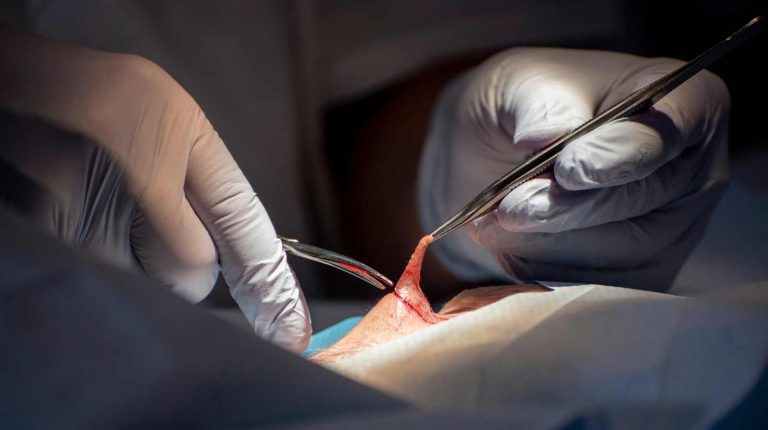
The graft is placed on the recipient site and then secured with specific dressings.
Post-operative care
Care includes regular dressing changes performed by a healthcare professional.
Relative immobilization of the grafted area promotes graft take.
Pain generally remains moderate and is managed with appropriate treatment.
Post-operative follow-up monitors progress and adjusts care.
Results and scars
The result corresponds to progressive graft take and skin closure.
Evolution is observed over several weeks, sometimes several months.
The grafted area may show a temporary color difference.
The scar quality depends on the individual, the location, and the care received.
Possible risks and complications
Partial or absent graft take may occur.
Delayed healing is possible depending on local vascularization.
An infection risk exists despite rigorous care.
Prompt management of any anomaly limits consequences.
Fees and coverage
Skin grafting is often a medical indication eligible for coverage.
Fees vary depending on the technique, the surface area treated, and the number of procedures.
A personalized quote is provided after evaluation.
The terms are clearly presented before any decision is made.