
You are considering rhinoplasty, or you have just had it, and you want to know how your nose will change over the coming months. Nose surgery can transform the shape of the nose considerably, yet the final result takes time: swelling and healing follow their own schedule. Here is what you can expect, month by month, during the post-operative period.
The First Week After Rhinoplasty: What Happens?
The first days are usually the hardest. You will notice significant swelling and increased sensitivity around the operated area. Daunting as it looks in the mirror, this belongs to normal healing.
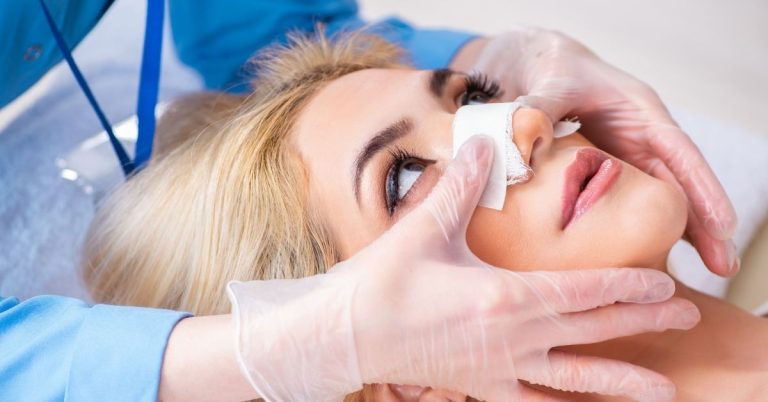
A splint is placed on the nose to hold its new shape. It protects the nose and helps limit early swelling. Bruising also appears on the face, mostly under the eyes, and fades over the following weeks.
Managing Post-Operative Symptoms
Follow your surgeon’s instructions closely during this phase. Avoid touching your nose, sleep with your head elevated, and apply cold compresses to reduce swelling. The care you take now pays off later in uncomplicated healing.
Second Week: First Signs of Improvement
By the second week, the swelling starts to go down. The splint usually comes off at your follow-up appointment, which can feel like a tense moment: it is the first time you see your nose unprotected. The tip of the nose will still look swollen, and that belongs to the normal gradual evolution.
Bruising is visibly reduced at this stage, though minor swelling may persist, especially in the morning. These are encouraging signs that your body is recovering as it should.
First Month: Visible Progress
After one month, the nose keeps healing and gradually feels like your own again. Sensitivity decreases, and most of the swelling has gone. Some residual swelling may remain; you can find more detailed information on common reactions after hair transplantation, where similar swelling can occur.
The first month also brings back light physical activity, always within your doctor’s specific recommendations. Walks and gentle exercise stimulate blood circulation and support healing.
Third Month: Towards Emotional Detachment
Around the third month, something shifts psychologically. You get used to the new features of your nose and the early nervousness fades. The shape begins to stabilise, though it still changes in subtle ways. Keep protecting the nose from any trauma, as it remains delicate.
Compliments from friends and family often start here, and they notice the change as harmonious rather than obvious. That does a great deal for self-confidence.
Evolution of the Nasal Tip
The nasal tip tells you most about how your rhinoplasty is settling. From the third month onwards, it becomes more defined and precise, slowly revealing its final appearance. Comparable refinement occurs in other procedures, post-weight loss correction among them.
Sixth Month: Intermediate Assessment
Halfway through the first post-operative year, the changes turn subtle but remain noticeable. The result already transforms the overall appearance, even if the full transformation needs a few more months. You now see more clearly how the nose sits within your facial balance.
Deep scar tissue resolves over this period, refining the nasal structure further. This journey differs from one patient to another, depending on skin type and on your situation before the operation.
Tenth to Twelfth Month: The Culmination of Evolution
Approaching the end of the first year, the image in the mirror comes close to the result projected during your initial consultation. Most visible changes have taken place by then, and with them the sense of accomplishment you have been waiting for.
Hesitation gives way to satisfaction and to renewed self-esteem. Do schedule a final post-surgical appointment to discuss any remaining adjustments with your specialist.
Frequently Asked Questions About Post-Rhinoplasty Evolution
How long does swelling last after rhinoplasty?
Swelling after rhinoplasty is common and can last for several months. The peak of swelling usually occurs in the first week, then gradually decreases. Sometimes, residual swelling can persist for up to a year, particularly at the tip of the nose.
When can the final results of rhinoplasty be expected?
The final results of rhinoplasty are generally not visible until a year after the procedure. Although improvements are visible each month, a gradual and continuous evolution occurs during this period, allowing the nose to reach its final state.
Can I exercise after rhinoplasty?
It is recommended to avoid any strenuous physical activity for the first few weeks after surgery. After one month, patients can resume light exercises, while regular sports are generally permitted after about three months, depending on the surgeon’s advice.
Why does sensitivity remain for a long time after rhinoplasty?
Sensitivity around the nose after rhinoplasty can persist due to the invasive nature of the procedure. The severed tissues and nerves need time to readjust and reconnect, which can take up to several months.