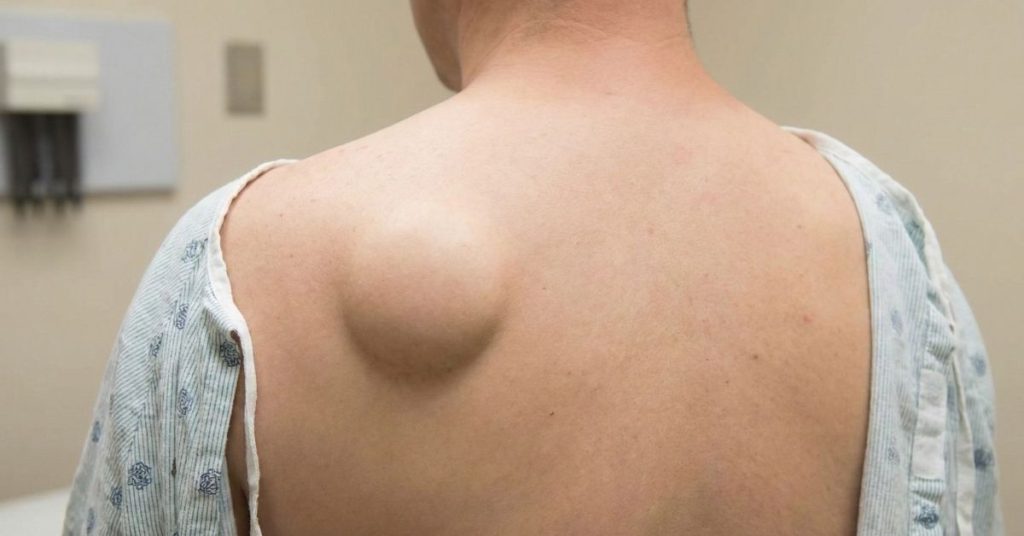
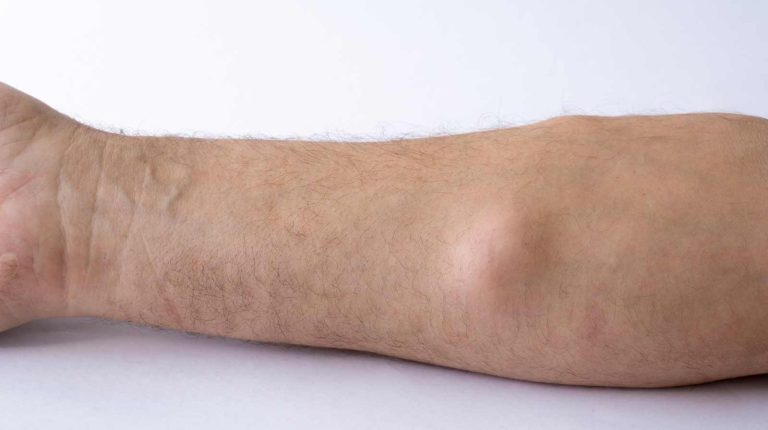
A soft lump under the skin of the back worries patients far more than it should. In the great majority of cases it is a lipoma, a benign tumor made of fat cells, and the back is one of its favourite locations. It rarely hurts. It can nonetheless become bothersome, either visually or because of where it sits. Here is what to look for, what the risks actually are, and what can be done about it.
What are the symptoms of a lipoma on the back?
A lipoma presents as a soft, painless lump lying just beneath the skin. Patients usually discover it by chance, running a hand along the back or feeling it against a chair. Pain is unusual and points to compression of a nerve or of a neighbouring structure.
On examination the mass is moderately well defined and slides slightly under the finger, without adhering to the skin above. Lipomas on the back vary widely in size at any age and in either sex. Some stay the size of a pea for years; others reach several centimetres in diameter.
What are the risks associated with lipomas?
A lipoma is benign and does not threaten health. Its drawbacks are practical. A large one on the back becomes visible under clothing and creates real cosmetic discomfort, which is a legitimate reason to consult.
More rarely, a lipoma presses on muscle or nerve and produces pain or restricted movement. Multiple lipomas, or lipomatosis, deserve attention of their own: when lesions multiply quickly, a medical opinion is needed to rule out another underlying condition. Consulting a specialist at Clinique Spontini is one route to specialised aesthetic care in Paris 16th.
Potential risk factors
- Genetics: A family predisposition can increase the chances of developing lipomas.
- Age: Adults between 40 and 60 years old are more likely to develop these growths.
- Trauma: Certain injuries or traumas could promote the development of abnormal fatty tissue.
What treatment should be considered for a lipoma on the back?
Removal becomes reasonable when the lipoma is uncomfortable, growing, or visible enough to bother you. Several techniques exist, each with its own trade-off between scar and recurrence. A specialised cosmetic surgery clinic in Paris 16th can set out the alternatives in detail.
Surgical intervention
Surgery removes the lipoma completely, capsule included, which is why it remains the reference. A simple excision is usually enough, performed under local anaesthesia, and the recurrence rate is low.
The trade-off is a scar and the usual surgical risks, infection and excessive scarring among them. On a back, where skin is thick and under tension, scar quality deserves an honest discussion beforehand.
Liposuction
For large lipomas, liposuction offers another route: fat cells are aspirated through a cannula introduced via a very small opening. The scar is minimal and recovery quicker than after open surgery.
The compromise is real, though. Aspiration leaves the capsule and some fat cells in place, so the chance of recurrence is higher than after complete excision.
Non-invasive options
Steroid injections into the lesion can reduce its volume in selected cases. The effect is partial and not definitive: the lipoma shrinks rather than disappears.
Whichever option is chosen, the mass should be followed afterwards so that any regrowth is picked up early.
When to consult a doctor?
A sudden change in size or shape, a lump that becomes hard or fixed, or unexplained pain all justify a consultation. Depending on the findings, an ultrasound or a biopsy confirms the nature of the tumour.
Regular review is worth keeping up for any abnormal tissue, since it allows change to be spotted before it becomes a problem. Once the diagnosis is certain, treatment can be matched to the size, the site and to what actually bothers you.
Frequently asked questions about lipomas on the back
Can a lipoma become cancerous?
No. A lipoma is a benign tumor made of fat cells and does not transform into cancer. Other masses can resemble one, however, so any subcutaneous lesion that appears or changes should be examined by a doctor.
How long does recovery take after lipoma removal?
Recovery depends on the size of the lipoma and the technique used. With less invasive methods, healing takes from a few days to two weeks. After a classic excision, particularly on the back where the skin is under tension, it takes longer.
What primarily causes a lipoma?
The exact mechanism remains unclear. Genetics, age and previous trauma to the area are the factors most often implicated, and certain pre-existing medical conditions raise the likelihood of developing several.