
Who is this procedure for?
The Deep Plane facelift is for women and men with significant sagging of the face and neck.
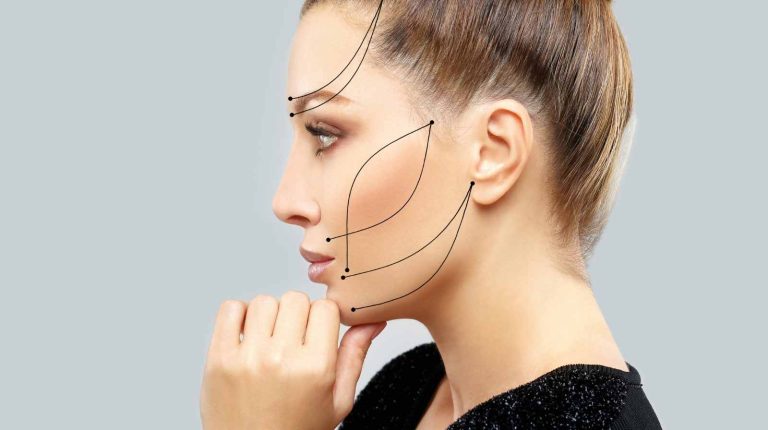
Affected signs often include sagging cheeks, marionette lines, a blurred jawline, and neck laxity.
The indication is based on an individualized clinical analysis performed during consultations.
This procedure can be considered when structural aging no longer responds to non-surgical treatments.
Good general health is still necessary to discuss this type of surgery.
Consultation process
The first consultation allows for a complete morphological assessment of the face.
An analysis of skin quality, volume position, and deep tissue mobility is recommended.
Expressed expectations are discussed to ensure they are consistent with surgical possibilities.
Detailed information is provided on the principle of the Deep Plane facelift, its limitations, and its aftercare.
A reflection period always precedes any surgical decision.
Preparation steps and technical choices
Preparation includes a pre-operative consultation, an appropriate medical assessment, and a meeting with the anesthesiologist.
It is recommended to specify the surgical plan based on the observed anatomy and degree of sagging.
A personalized quote is provided after the surgical indication is confirmed.
Pre-operative instructions cover medication and lifestyle.
The predictable post-operative course is explained before any scheduling.
The procedure in practice
The Deep Plane facelift is performed under general anesthesia in an authorized surgical facility.
The duration of the procedure varies depending on the extent of the surgery and any associated procedures.
Incisions are usually located around the ear, in anatomically concealed areas.
Deep tissues are dissected and repositioned without excessive skin tension.
A short hospital stay, sometimes outpatient or with one overnight stay, may be offered depending on the case.
Post-operative course
The recovery typically involves swelling, bruising, and a moderate feeling of tightness.
Pain is usually controlled with appropriate painkillers.
Local care and regular follow-up are arranged after the procedure.
A gradual return to social activities is planned, depending on individual progress.
Post-operative monitoring allows for the observation of healing and tissue adaptation.
Results and scars
The goal is a natural facial rejuvenation without altering one’s identity.
The improvement affects the jawline, cheeks, and neck, with overall harmony.
The results evolve over several months as the tissues stabilize.
Scars are placed in inconspicuous areas and their appearance changes over time.
A sufficient period of time after the procedure is needed to fully appreciate the final results.
Risks and potential complications
Like any surgery, the Deep Plane facelift carries potential risks.
These may include hematomas, temporary sensory disturbances, or delayed healing.
More rare complications can occur despite rigorous management.
Transparent information is provided during pre-operative consultations.
Follow-up allows for the prompt identification and treatment of any potential issues.
Fees and coverage
The Deep Plane facelift is considered cosmetic surgery and is generally not covered by social security.
The fee depends on the complexity of the procedure, the operating time, and the costs associated with anesthesia and the facility.
As an indication, the price starts from €10,000, depending on the situation.
A detailed and personalized quote is provided before any decision.
No surgical procedures of this type are performed within the clinic.