

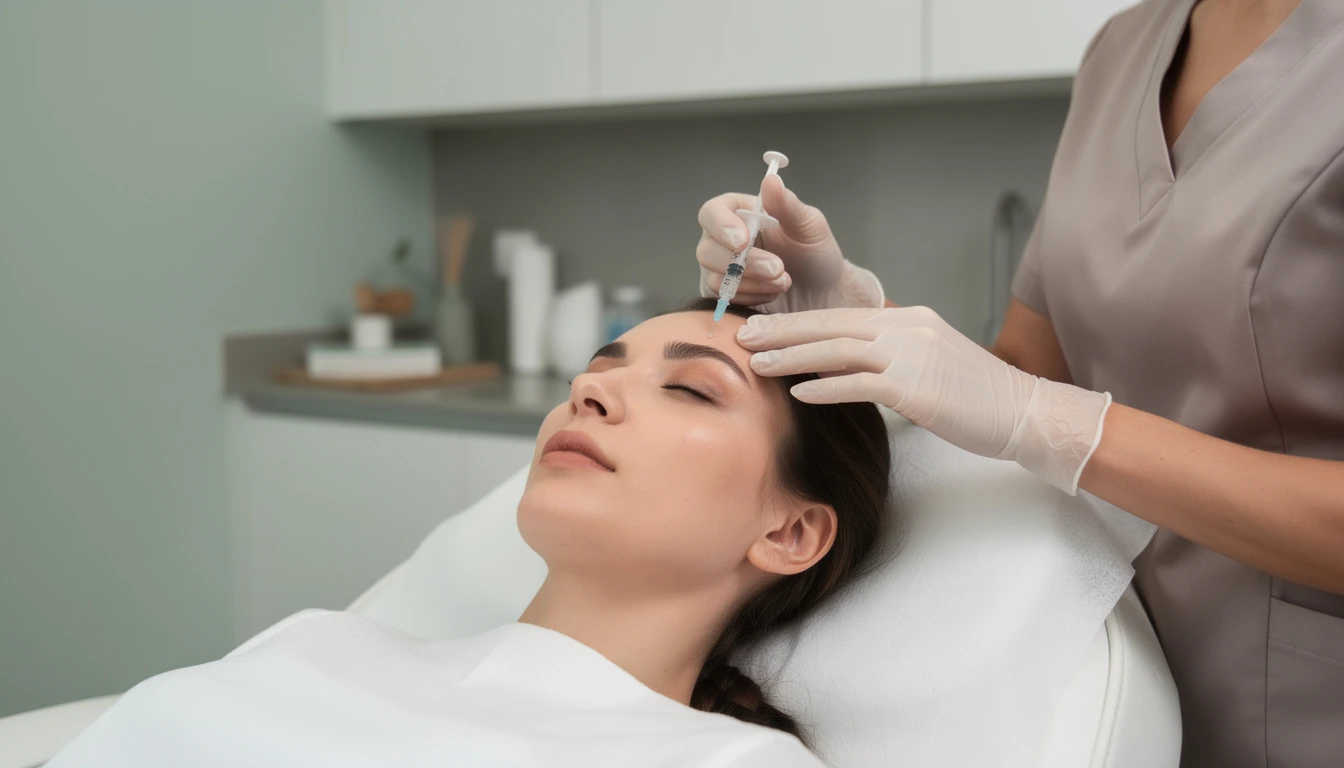
What does it feel like during a Botox injection?
It’s difficult to discuss the immediate effect of Botox without mentioning the first sensation: the needle pierces the skin, unlike a simple anti-wrinkle cream applied at home. Contrary to popular belief, the majority of patients report moderate discomfort, comparable to a small prickling sensation. The injection only lasts a few seconds per treated point, which greatly reduces the intensity of any discomfort. To better understand the substance used and its precise effects, it is interesting to consult this page explaining the principle, mechanism of action, and indications of Botox.
The injected area also plays a major role in the perception of sensitivity. The forehead, crow’s feet around the eyes, or the glabella between the eyebrows have varying thicknesses and different vascularization. As a result, some areas may seem more sensitive than others, even though the technique remains the same.
What is the influence of individual sensitivity?
Each patient brings their own history with pain, which is called individual sensitivity. This factor explains why some simply describe a slight pinch, while others talk about real anxiety before their appointment. Emotional state, stress, or fatigue can also amplify the perception of the injection and make it, temporarily, more unpleasant.
The more you communicate with your practitioner, the better you will manage this psychological dimension. Clarifying the steps of the procedure often helps to alleviate many apprehensions related to the fear of needles and anticipated discomfort. Similar experiences exist after other procedures, as evidenced by the variety of sensations felt after an aesthetic intervention; people who have undergone surgery may also wonder about postoperative pain and how it evolves.
Pain management: what are the options?
Anesthesia is generally not necessary for traditional Botox injections. However, some doctors offer the application of a light anesthetic cream if the patient expresses specific concerns. This temporarily reduces the sensation on the skin and, above all, provides psychological reassurance.
In addition to using creams, pain management often includes simple tricks like briefly cooling the injected area just before the procedure. When good information, delicate gestures, and attentive support are combined, the painful sensation remains exceptionally low for the vast majority.
What sensations appear after the session?
Once the technical procedure is over, most people report temporary sensations such as stiffness, discomfort, or even minor local headaches. These effects rarely last more than 24 to 48 hours and fade naturally. Post-treatment sensations are less related to the toxicity or the product itself than to the micro-traumas created by the needle’s penetration.
These transient phenomena differ significantly depending on the injected area, the depth of the injection point, and the patient’s subjective experience. When stiffness, pressure, or discomfort persist beyond a few days, it is recommended to consult your doctor to ensure proper follow-up.
Common side effects and practical advice
Side effects of Botox include small redness, sometimes slight edema (localized swelling), or rare shallow bruises, especially if the patient has capillary fragility. To limit these inconvenconveniences, avoiding anti-inflammatory self-medication before the session is one of the common precautions mentioned during preparation.
In case of temporary malaise or headaches, I recommend prioritizing rest and hydration. Follow-up consultations also serve to assess healing, reassure, and treat any moderate adverse effect if necessary.
Possible complications after injection
If sharp pain, severe inflammation, or any other worrying symptom occurs, it is important to react quickly. Fortunately, such complications remain very rare, provided that strict protocols are followed, including rigorous asepsis and adherence to volumes adapted to each patient.
Here is a list of possible complications, although rare:
- Persistent edema or significant swelling in the injected area
- Unusual headaches lasting several days
- Local infection or increasing redness with heat
- Lasting sensation of excessive facial stiffness limiting expression
- Allergy or abnormal skin reaction
Precautions and patient comfort during a Botox session
Personalized welcome, quality of listening, and detailed explanation of the protocol are as important as the injection technique itself. Each step aims to ensure safety and preserve patient comfort, from disinfection to the application of a cooling dressing.
To offer the best possible experience, professionals systematically adapt their techniques to the morphology of each face, the desired depth for each point, and any apprehensions shared by the patient.
Anesthesia and adaptation to limit discomfort
Certain procedures require special attention if the injected area has a high nerve density or increased sensitivity (upper lip, chin). It is in these cases that a small targeted local anesthetic is particularly useful for improving tolerance.
In all cases, there is always an open dialogue regarding the degree of anticipated pain, management methods, and personalized advice that will be adapted from one session to another if necessary.
Preparing for your appointment: effective tips
To limit pain or discomfort during your injection, remember to hydrate your skin well, arrive rested, and avoid alcohol or any medication that could thin the blood. This preparation optimizes comfort and shortens the duration of any minor side effects.
Never hesitate to ask the doctor all your questions to establish optimal pain management and anticipate each step, from choosing the treated area to post-session care. Good support brings serenity and confidence and radically transforms the experience felt during the procedure.
