


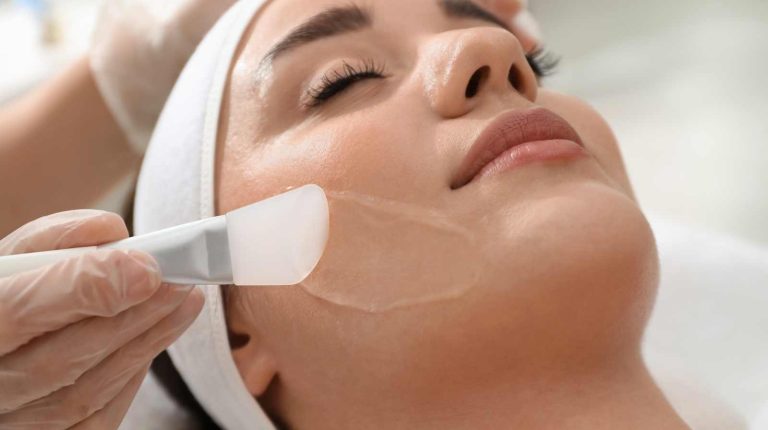
Pregnancy changes a woman’s body considerably, and skin is no exception. Alongside the physical transformations, many patients ask whether their usual beauty treatments remain safe for them and for the baby. One question comes up more than the others: can you have a peel during pregnancy? Here is what the different types of peel involve, what they do to pregnant skin, and where the real limits lie.
What is a peel?
A peel exfoliates the skin and stimulates cell renewal. Chemical or natural agents are applied to remove the superficial layers, which revitalises the complexion, softens wrinkles, lightens pigment spots and improves texture.
Peels range from superficial to deep. Superficial peels use mild acids such as glycolic acid; the more intense ones rely on powerful agents including trichloroacetic acid (TCA). Depth changes both the result and the risk profile, which is exactly what matters during pregnancy.
Types of peels and common ingredients
Peels are classified by depth of exfoliation and by the active ingredient used. That classification is what determines their safety in pregnancy.
- Superficial peels: These light treatments often involve the use of glycolic acid or other AHAs (alpha-hydroxy acids), beneficial for overall skin radiance.
- Medium peels: Salicylic acid is frequently used here, known for its anti-inflammatory properties.
- Deep peels: More invasive, they require the use of powerful agents like phenol or TCA.
Peeling during pregnancy: is it possible?
The general recommendation is to postpone potentially aggressive cosmetic treatments while you are pregnant. The reasoning rests on the absorption of chemicals through the skin and their theoretical passage to the fetus. Hormonal changes add a second problem: pregnant skin reacts more readily to irritation and allergic reactions than it did before.
Some peels are formally contraindicated, starting with those based on salicylic acid. A salicylate related to aspirin, it crosses the skin barrier and enters the bloodstream. At high doses this molecule has teratogenic potential, which rules it out for the duration of the pregnancy.
Potential risks of peeling during pregnancy
The risks are worth taking seriously:
- Exacerbated skin reactions due to increased skin sensitivity.
- Absorption of chemicals that could potentially harm fetal development. Radiofrequency microneedling is likewise postponed during pregnancy, though it treats pigment spots effectively afterwards – learn more about microneedling.
- Increased sensitivity to sun exposure, increasing the risk of pigment spots.
Precautions to take during beauty treatments while pregnant
Ruling out certain peels does not mean giving up skincare for nine months. A few precautions keep you on safe ground:
Speak to your dermatologist before starting any treatment. Their assessment is what separates a safe option from a risky one in your particular case. Beyond that, gentle alternatives exist: manual scrubs based on finely ground nuts or other natural ingredients exfoliate without introducing abrasive chemicals.
Safe alternatives to chemical peels
Two options work well during this period:
- Use moisturizing masks enriched with vitamins to nourish and firm the skin.
- Opt for homemade treatments using yogurt and honey for gentle exfoliation.
The importance of hydration and sun protection
Pregnant skin needs care to stay comfortable and to avoid lasting damage. Focus on daily hydration with nutrient-rich creams suited to your skin type and to its new reactivity.
Sun exposure deserves equal attention. UV rays worsen melasma, the pigmentation mask that pregnancy hormones already predispose you to. Apply a sunscreen with a minimum SPF of 30 every day, including before short outings, and reapply every two hours.
Frequently asked questions about peels and pregnancy
Which peels are considered safe during pregnancy?
Gentle peels based on lactic acid are generally regarded as safe during pregnancy. They improve skin hydration with no known risk to the fetus. Check with a healthcare professional before any peel, whatever its depth. Gentle mechanical scrubs at home remain a reasonable alternative.
Why is salicylic acid not recommended during pregnancy?
Salicylic acid is chemically close to aspirin, crosses the skin barrier and reaches the bloodstream. Research on its effects in pregnancy remains limited, but at high doses it poses a theoretical risk to the fetus, which is why most specialists advise against it during this period. For more on the use of radiofrequency in various contexts, consult the resources provided by Clinique Spontini – learn all about radiofrequency.
What should I do if my skin becomes very sensitive during pregnancy?
Increased sensitivity during pregnancy is common and driven by hormonal fluctuations. Switch to hypoallergenic products without artificial fragrance, and simplify your routine: fewer chemical actives, more soothing ingredients such as aloe vera or green tea.


