What happens right after a hair transplant?
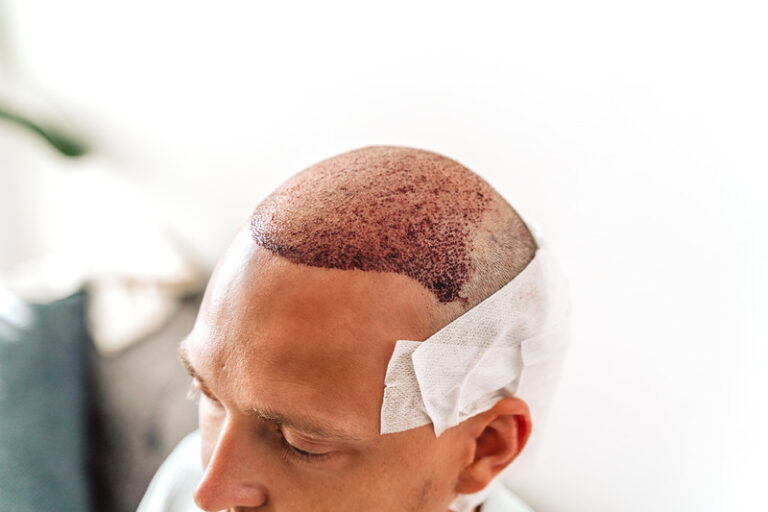
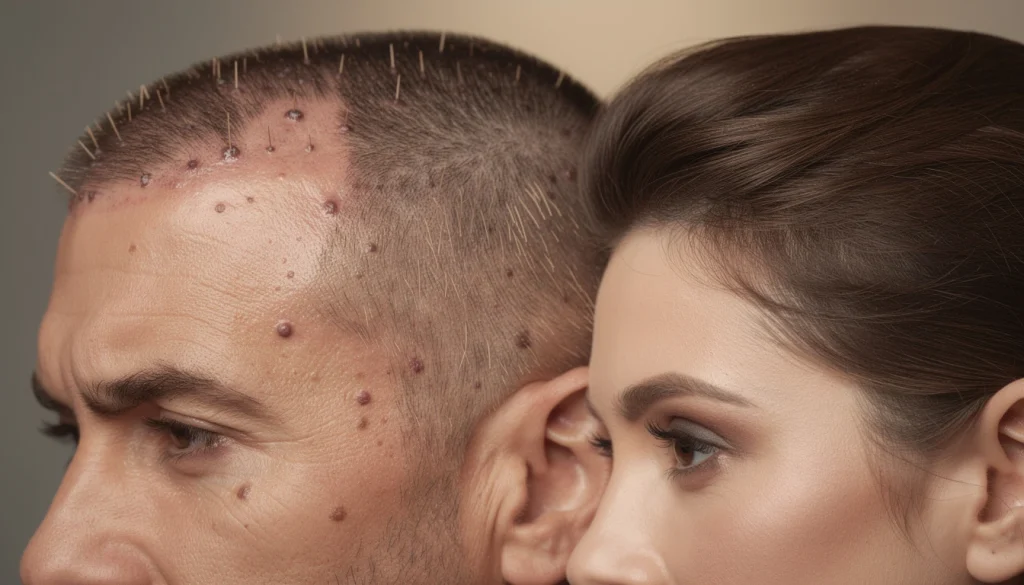
In the days following the procedure, the scalp often shows visible traces: scabs, slight tingling, redness, or small localized swelling. Nothing to worry about, this is part of the classic post-hair transplant journey. These signs gradually disappear with healing.
Regarding hair, it is very common to observe a progressive shedding of the grafts within two to four weeks post-transplant. This phenomenon, called “shedding,” can be striking due to its suddenness. However, it simply indicates a restart of the hair cycle: the follicles implanted under the skin are preparing to enter the next phase of progressive growth.
What are the main stages of regrowth?
Hair regrowth after a transplant generally follows a fairly similar pattern for most patients, while allowing for variation depending on the patient. Here’s how this month-by-month evolution usually unfolds.
For those wondering about hair transplants, these stages are essential for anticipating the final result and better understanding the overall process.
When does regrowth begin?
The actual start of regrowth appears around the third month after the transplant. Until this stage, the treated area often looks bare: almost no visible hair remains. It is precisely at this point that the first visible results emerge, in the form of fine, translucent hairs that grow slowly but surely.
To learn more, it is interesting to consult detailed resources on hair regrowth after a transplant that explain precisely when the first visible signs appear and how density evolves over the weeks.
What is surprising at first is the slowness of the evolution. But I encourage you to be patient. There is no universal regrowth timeline: everyone reacts in their own way, some notice growth before three months, others wait four months or more. So, remain confident during this initial phase.
How does hair density evolve in the first few months?
Between the fourth and sixth months, there is a real improvement in hair density. The hairs become thicker, gain color, and the transplanted area begins to visibly cover. At this stage, you have reached approximately 30% to 40% of the final result.
Even though the wait continues, this month-by-month evolution is motivating: the forehead or the crown of the head already catch the light differently, proof that coverage is progressing. Some areas may seem to lag behind, but they almost always catch up.
What signs herald mature regrowth between 6 and 12 months?
From the sixth month onwards, your mirror becomes a valuable ally. Mature regrowth sets in: the hairs thicken, darken, and gain length. This evolution continues until the ninth, or even twelfth month, marking the consolidation of the work done.
Around the first anniversary of the transplant, most patients show 70% to 80% of their new hair density. Some follicles still take time to produce their fibers, but the bulk of the final result has been achieved. You can finally appreciate the complete transformation.
What factors influence the regrowth timeline?
It is tempting to compare your progress to that of others, but keep in mind that variation depending on the patient plays a major role in the speed of consolidation. Each organism has its own biological rhythm.
Various elements come into play: quality of the surgical procedure, initial state of the scalp, genetics, lifestyle after the procedure… Some profiles favor rapid growth, while others require more patience to see the first visible results appear.
- Age at the time of surgery: younger individuals often observe more dynamic regeneration.
- The donor and recipient areas: some regions like the tonsure sometimes have slower growth.
- Hormonal status and local blood circulation also play a key role.
- Adherence to post-transplant care to limit incidents and stimulate microcirculation.
- The natural thickness of the remaining hair: fine hair gives an impression of less density, even with good regrowth.
Every detail counts in accelerating or slowing down progressive growth. This is why no one gives the exact same regrowth timeline after a hair transplant, but rather a broad estimate adapted to each individual situation.
When can the final result of hair regrowth after a transplant be judged?
While excitement builds as the first hairs appear, it is important to remember that, as a general rule, one year is the minimum time required to see the full transformation. In some cases – thick scalp or difficult scalp – this period can extend up to eighteen months.
It is in the long term that hair regrowth after a transplant reveals its full value. Some days seem stagnant, then suddenly, everything changes in a few weeks. Do not rush comparisons or conclusions; let the biological rhythm work, accompanied by regular and appropriate care.
What tips can be adopted to optimize progressive growth?
To actively support progressive growth, it is essential to adopt a gentle approach towards your scalp. To promote the health and anchoring of new follicles, here are some tips accessible to everyone.
Adopt a gentle shampooing routine, avoid tight hairstyles for the first few weeks, and gently massage the scalp to boost microcirculation. A balanced lifestyle – varied diet, sufficient hydration, restorative sleep – remains a major asset for activating natural repair mechanisms.
- Avoid harsh products containing silicones and sulfates.
- Put away heated styling tools as much as possible during the first year.
- Strictly adhere to recommended medical follow-up appointments.
- Consider dietary supplements, under medical supervision, if needed to enhance nutrition.
Always keep in mind: the key lies in consistency. This way, you effectively support the various stages of regrowth to fully enjoy your new hair when the big day arrives.